
A beginner's guide to the moon phases
By Sam, The Wild Altar · 20 November 2026
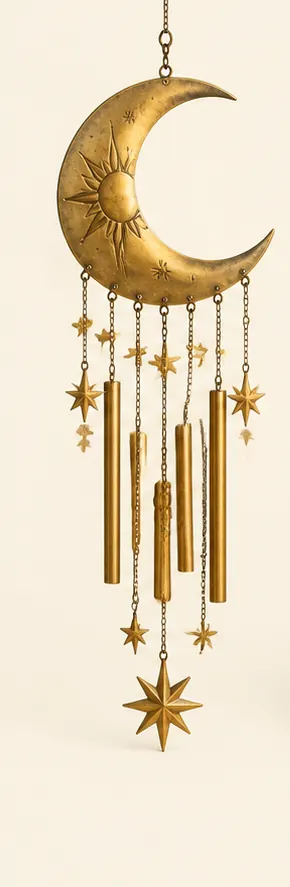
The moon has been a marker of time for as long as people have looked up. Its cycle of roughly 29.5 days gives a natural rhythm to the month, and many people enjoy noticing it and marking it in small ways at home. This guide covers what is actually happening in the sky, what each phase is called and a few gentle ideas for paying attention to it.
Why the moon has phases
The moon doesn't make its own light. We see it because it reflects sunlight. As the moon travels around the Earth, the angle between the sun, Earth and moon changes, so we see different amounts of its lit half. Nothing is covering the moon. We are simply seeing it from a different angle each night.
When the moon is growing in light it is called waxing. When it is shrinking it is waning. In the UK and the rest of the northern hemisphere, a waxing moon is lit on the right-hand side and a waning moon on the left.
The eight phases
- New moon: the moon sits between the Earth and the sun, so the side facing us is dark and it is barely visible.
- Waxing crescent: a thin sliver appears on the right in the evening sky, just after sunset.
- First quarter: half of the moon's face is lit. It is called a quarter because the moon is a quarter of the way through its cycle.
- Waxing gibbous: more than half is lit and it grows a little fuller each night.
- Full moon: the whole face is lit. It rises around sunset and sets around sunrise.
- Waning gibbous: the light begins to shrink from the right-hand side.
- Last quarter: half lit again, this time on the left, and often seen in the morning sky.
- Waning crescent: a thin sliver on the left before dawn, before the cycle begins again.
Full moon names
Many cultures have named each month's full moon after what was happening in nature at the time. In Britain you will often see names such as the Wolf Moon in January, the Hare Moon in spring, the Harvest Moon nearest the autumn equinox and the Cold Moon in December. These names vary from place to place and source to source, so treat them as folklore rather than fixed rules.
Simple ways to mark the phases at home
There is no single right way to do this. These are some of the ways people bring the moon's rhythm into everyday life.
At the new moon
The new moon is traditionally associated with beginnings. Some people like to write down a few hopes or intentions for the month ahead, tidy their altar or start something small and new. A clean slate on a dark night is a pleasing idea.
As the moon waxes
The growing light is often linked with building and gathering. It can be a nice time to work steadily on a project, sow seeds indoors or simply notice the crescent getting fuller on your evening walk.
At the full moon
The full moon is the easiest phase to see and the one most people choose to mark. You might step outside to look at it, turn the lights off for a few minutes and sit by a window, or keep a short journal of how the month has gone. Some people like to sound a bell or singing bowl as a way of marking the moment. The Moon Phase Singing Bowl Set carries the phases around its side, and the Triple Moon Altar Bell is a small, simple way to begin or end a quiet ritual.
As the moon wanes
The shrinking light is traditionally associated with letting go and rest. It is a natural time to clear clutter, finish things off and slow down a little before the next new moon.
Keeping track
A paper moon calendar on the wall or a note in your diary is all you need to follow the cycle. Some people like a visual reminder in the home too: the Moon Phase and Tree Arch Wall Shelf shows the phases and gives you somewhere to place a candle or crystal, while the Rotating Metal Moon Wind Chime brings a little moonlight to the garden.
The best thing about the moon is that it asks nothing of you. It will keep turning whether you mark it or not. Noticing it is simply a way of feeling a little more connected to the natural rhythm of the month.
Questions about anything here? Get in touch, I answer every email myself.
Sam, The Wild Altar